
Giles Lindsay exposes the Decision Gap constraining organisational agility and value. Because organisations do not move at the speed of their plans. They move at the speed of their decisions.
BIO
Giles Lindsay is a board-level CIO and CTO with over 25 years of experience leading technology, data, and digital transformation across financial services, SaaS, and high-growth organisations. An award-winning technology leader, he has been recognised as a Global CIO 200 winner, a World 100 CIO & CTO leader, and a UK CIO 100 award recipient. He is a Chartered IT Professional (CITP), Fellow of the Chartered Management Institute (FCMI), the BCS, The Chartered Institute for IT (FBCS), and The Institution of Analysts & Programmers (FIAP). His leadership across the UK and global technology companies has consistently fostered innovation, growth, and adept stakeholder management. He helps organisations align technology with business outcomes, enabling leaders to make confident decisions, reduce risk, and deliver measurable value. His work spans AI-first platforms, large-scale transformation, and enterprise operating model design. He is the author of two Amazon bestselling books, Clearly Agile and The Adaptive Leader, exploring how leadership must evolve to keep pace with AI and increasing organisational complexity. As a keynote speaker, Giles brings practical insight and real-world experience, focused on solving the right problems and executing with clarity. He writes and speaks regularly for board, CIO and CTO audiences on AI leadership, governance and organisational capability.
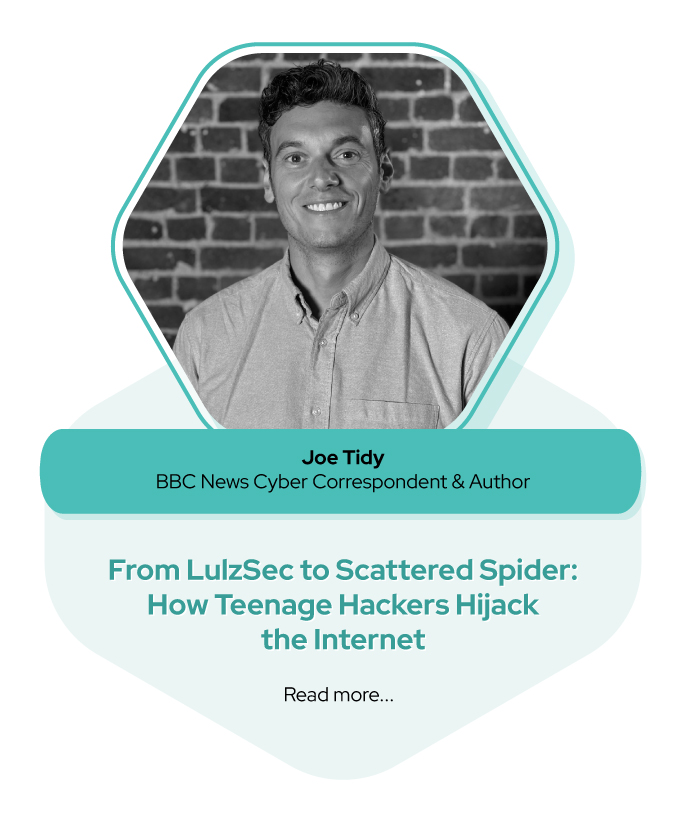
Gone is the era of harmless youthful curiosity; teenage hacking is now serious cybercrime fueled by money, fame, or criminal group recruitment. In his book Ctrl+Alt+Chaos, Joe Tidy lifts the lid on the dark underbelly of the internet and youth culture tracking the rise and fall of groups such as LulzSec, HTP, UG Nazi, Lizard Squad, Lapsus$ and Scattered Spider. Join Joe for his keynote which draws parallels with recent high-profile attacks from teenage gangs and asks the question – how can we stop the cycle of teenage boys hijacking life online?
BIO
Joe Tidy is a reporter, presenter, podcaster and author. As the BBC’s first Cyber Correspondent, Joe Tidy is the corporation’s definitive authority on hacking and digital warfare. With over a decade of experience—spanning Sky News and the BBC—Tidy has been on the front lines of every major global cyberattack, reporting across television, radio, and digital platforms. Joe is the author of Ctrl+Alt+Chaos and the presenter of the BBC’s Cyber Hack: Evil Corp podcast series. His book of Ctrl+Alt+Chaos: How Teenage Hacker Hijack the Internet is out now and investigates the dark side of teen hacking culture and why we are repeatedly failing as a society to address the growing issue of teen cybercrime. Joe is the BBC’s first ever Cyber Correspondent and the foremost voice in the corporation on cybercrime and hacking. Over the past ten years he has covered all major cyber-attacks for BBC and before that at Sky News working across TV, Radio, social media and news websites. He has made documentaries about cyber security travelling to the US, Russia, Saudi Arabia, Argentina, Germany and Ukraine to track down stories and characters.
BIO
Brian McGeough is Chief Information Officer at Creditsafe, the world’s most‑used provider of business credit reports. Creditsafe operates across 27 offices globally, providing instant access to business credit information in nearly every country worldwide. Brian brings over 30 years of experience in the technology sector, having previously held senior roles at Intel, Activision, and AWS, spanning large‑scale enterprise platforms, cloud, and product‑driven technology organisations. As CIO, Brian leads Creditsafe’s global Technology function, encompassing Internal IT and Business Applications, Production Engineering, Information Security, Data Engineering, and Product Development. His organisation consists of approximately 450 highly skilled engineers, primarily based across the UK& Ireland and Hyderabad, India.
What makes YOU valuable within the tech community as a leader?
BIO
Winner – Hot Topics Global Future CIO 100
Finalist – Women in Insurance Awards: Role Model category
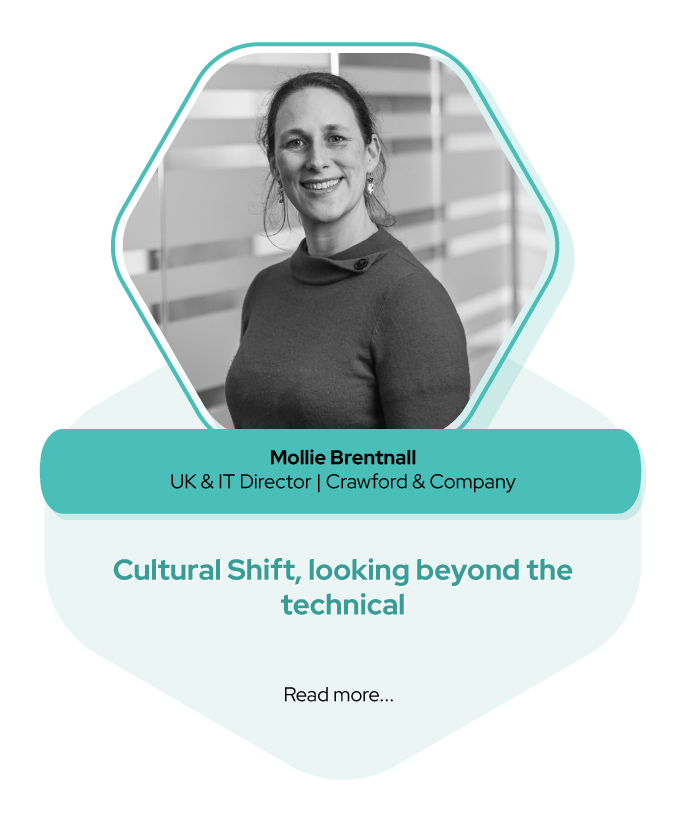
Mollie Brentnall joined Crawford as IT Director for UK & Ireland in 2024. As IT Director, Mollie Brentnall is responsible for managing the UK Development and Crawford Legal Services™ IT teams and is accountable for all IT deliverables across the UK business. She is also part of the UK executive leadership team at Crawford.
Mollie Brentnall has considerable experience in leading IT teams for major organisations in the UK. Most recently, she was IT Director, UKI, AXA Partners where she led teams across IT service delivery, applications, infrastructure, project delivery, and security execution. Prior to this, Mollie was Head of IT, Core Transport, DHL with her remit spanning the UK.
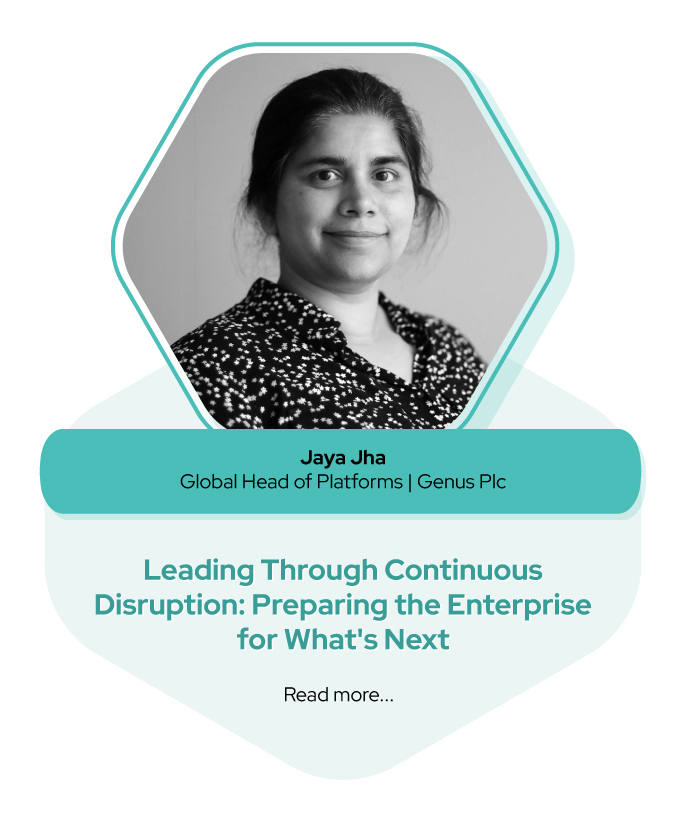
Technology leaders are no longer preparing for a single transformation. They are leading through continuous disruption, where AI, shifting business models, rising expectations and operational pressures are changing faster than traditional planning cycles.
This roundtable will explore how enterprises can adapt repeatedly without losing control, trust or delivery focus, and how leaders can balance immediate progress with the long-term resilience, governance and organisational capability needed for whatever comes next.
BIO
Jaya Jha is Global Head of Platforms at Genus plc, where she leads strategy across enterprise applications, cloud infrastructure, data and AI enablement. She immerses herself in the business to ensure technology decisions are grounded in commercial and operational realities, while maintaining a clear long-term direction. Her approach combines visible short-term wins with resilient platforms, effective governance and sustained execution. With a hands-on engineering background, she bridges strategy and delivery and helps teams navigate complex change with clarity. She is also active in clean-tech ventures within the Cambridge innovation ecosystem and has undertaken executive education at Cambridge Judge Business School.
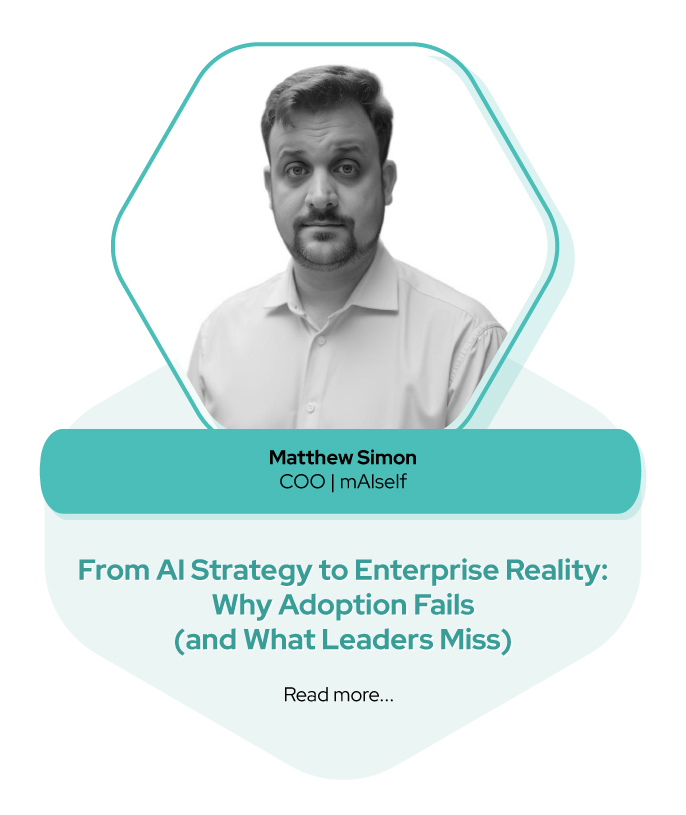
Technology is the easy part. AI strategies live and die by how they are adopted, deployed, and exercised every day. Matthew Simon provides practical real life advice on ensuring that your AI strategy works for you and your business goals.
BIO
Matthew Wolff Simon is co-founder and COO of mAIself and a technology and operations leader with over twenty years building and scaling globalorganisations. Most recently he built a 250-person engineering centre for Comcast, where he designed the governance framework for AI applications inproduction and led AI-driven automation across the operation. He has consulted on operating models and reliability for two of the largest US banks, andbuilt capability centres across EMEA and APAC. His work focuses on the human and operational side of AI adoption, because, as he puts it, technology is theeasy part; people are the hard part.
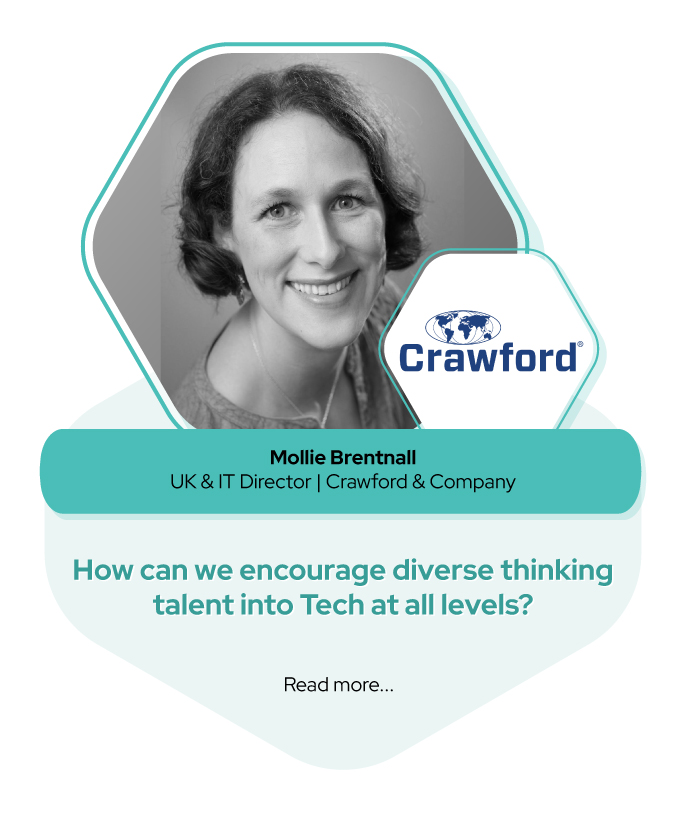
Challenging ourselves to question the status quo when it comes to diverse thinking in our teams.
BIO
Winner – Hot Topics Global Future CIO 100
Finalist – Women in Insurance Awards: Role Model category
Mollie Brentnall joined Crawford as IT Director for UK & Ireland in 2024. As IT Director, Mollie Brentnall is responsible for managing the UK Development and Crawford Legal Services™ IT teams and is accountable for all IT deliverables across the UK business. She is also part of the UK executive leadership team at Crawford.
Mollie Brentnall has considerable experience in leading IT teams for major organisations in the UK. Most recently, she was IT Director, UKI, AXA Partners where she led teams across IT service delivery, applications, infrastructure, project delivery, and security execution. Prior to this, Mollie was Head of IT, Core Transport, DHL with her remit spanning the UK.
BIO
Joe Tidy is a reporter, presenter, podcaster and author. As the BBC’s first Cyber Correspondent, Joe Tidy is the corporation’s definitive authority on hacking and digital warfare. With over a decade of experience—spanning Sky News and the BBC—Tidy has been on the front lines of every major global cyberattack, reporting across television, radio, and digital platforms. Joe is the author of Ctrl+Alt+Chaos and the presenter of the BBC’s Cyber Hack: Evil Corp podcast series. His book of Ctrl+Alt+Chaos: How Teenage Hacker Hijack the Internet is out now and investigates the dark side of teen hacking culture and why we are repeatedly failing as a society to address the growing issue of teen cybercrime. Joe is the BBC’s first ever Cyber Correspondent and the foremost voice in the corporation on cybercrime and hacking. Over the past ten years he has covered all major cyber-attacks for BBC and before that at Sky News working across TV, Radio, social media and news websites. He has made documentaries about cyber security travelling to the US, Russia, Saudi Arabia, Argentina, Germany and Ukraine to track down stories and characters.
Do you ever look at your role today and wonder “How the devil did I get here and where on earth will I need to be in 2 years?”
BIO
Seasoned Group CIO with three decades of expertise in leading IT delivery teams for Blue Chip and Central Government organisations. Named in the UK Top100 CIO Awards in 2024 & 2025. Demonstrated success in driving business value through technology solutioning. A strategic thinker and effective collaborator, passionate about agile delivery to meet organisational objectives. Extensive experience in Digital Transformation, Business Change, Consultancy, Service Delivery, ERP Programmes, T&T Projects, and Organisational Management. Proven ability to navigate complex business landscapes and deliver results in high-pressure regulated environments.
Looking at various methods to ensure that change is embedded into the culture of a company, not just added on top.
Examples covering:
BIO
Winner – Hot Topics Global Future CIO 100
Finalist – Women in Insurance Awards: Role Model category
Mollie Brentnall joined Crawford as IT Director for UK & Ireland in 2024. As IT Director, Mollie Brentnall is responsible for managing the UK Development and Crawford Legal Services™ IT teams and is accountable for all IT deliverables across the UK business. She is also part of the UK executive leadership team at Crawford.
Mollie Brentnall has considerable experience in leading IT teams for major organisations in the UK. Most recently, she was IT Director, UKI, AXA Partners where she led teams across IT service delivery, applications, infrastructure, project delivery, and security execution. Prior to this, Mollie was Head of IT, Core Transport, DHL with her remit spanning the UK.
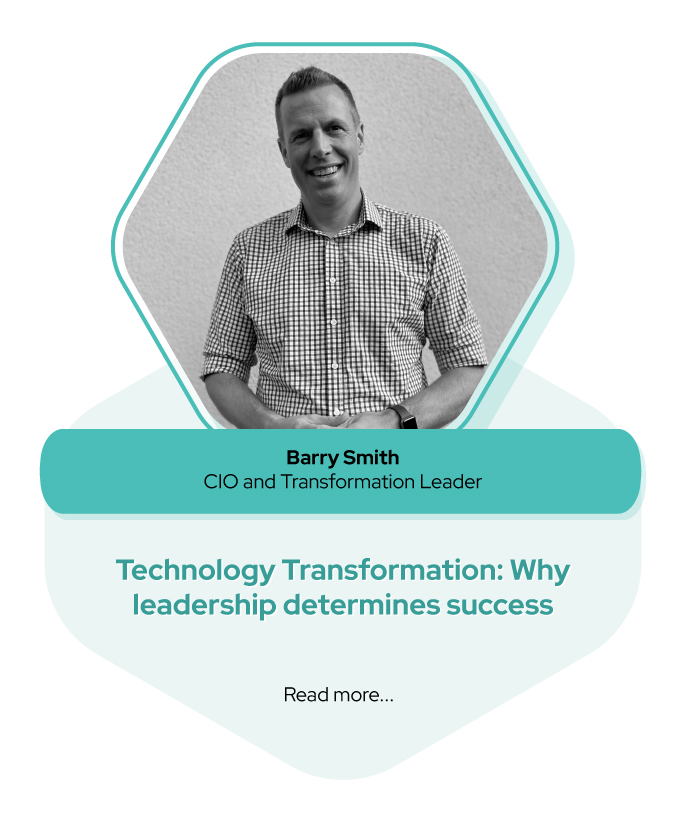
Delivering technology transformation isn’t about technology but leadership, clarity and execution. Drawing on CIO experience, Barry Smith shares lessons on stakeholders, teams and governance in an AI-driven world.
BIO
Barry Smith is a Chief Information Officer and digital transformation leader with over 20 years’ experience delivering large-scale technology change acrossglobal infrastructure and professional services organisations. He specialises in aligning technology strategy with business outcomes and leading complexprogrammes spanning ERP, cloud, cyber security and AI governance. Barry has led multi-country transformation initiatives and advises boards on technologystrategy and risk. He is recognised for building high-performing teams and delivering measurable business value, with a focus on the leadership required todeliver transformation in an increasingly complex world.
Exploring how institutions can adopt a Human + AI operating model to drive transformation, embed governance, and scale innovation, combining culture change, data strategy, and responsible AI for sustainable impact.
BIO
A strategic digital, data, and AI transformation leader with over 20 years of experience delivering large-scale technology modernisation and organisational change across Higher Education and Local Government. Currently serving as Associate Director of Strategy and Change at the University of London, leading enterprise-wide transformation initiatives supporting the UK Government’s Lifelong Learning Entitlement agenda. Specialises in AI governance, digital strategy, cloud modernisation, enterprise architecture, and data-driven operating models. Recognised for building human-centred digital organisations, with a strong track record of leading complex transformation programmes, stakeholder engagement, and innovation initiatives that improve operational efficiency, learner experience, and institutional performance.
Chris will walk through his recent Board slides to his clients, including private equity and finance, explaining the ‘whys and hows’ of what he presented, his and his team’s objectives from the session, and advice on how to tailor updates to your Board, what worked, what didn’t.
BIO
I am an Information Security professional, with experience ranging as CISO delivering firm-wide strategy to client-facing delivery as a cyber consultant in a variety of roles and industries. I’m a strong advocate that security is something a business does across the enterprise; it must be built into processes and policies across the organisation in a way that keeps the place running. I do this by working with teams inside and outside IT – ‘shift even further left’ is my mantra. Information security experience in government, legal and financial services, encompassing: Board reporting, cyber security strategy, certifications and compliance, third party assurance, security policy frameworks, and operational resilience, business continuity and IT disaster recovery. How can we help organisations understand the threats to their information, today and in the future?
A ransomware attack has locked down your organisation’s systems and the hackers are playing games. Literally.
They claim they only needed one set of stolen credentials to get in. Now, they’ve given you the five suspects, five possible methods of compromise, and five locations it could have happened.
If your team can crack the case and identify the right combination, they’ll have over the decryption key. Get it wrong? Game over.
BIO
We do escape rooms, vishing simulations, AR missions and large-scale events that make people actually experience what a breach feels like. Because the only cyber training that changes behaviour is the kind that leaves a mark. In spring 2023, we built a cyber escape room that lived in a briefcase. It was scrappy, rough, and completely unlike anything else in the industry. The goal was simple: make people actually engage with cyber security by letting them experience it. Not observe it. Not memorise it. Live it.
That first escape room turned heads. Then it turned into a business. Then it went global. “We’re not here to tick boxes. We’re here to change what people do when the real thing hits”
Today, The Cyber Escape Room Co. designs and delivers physical, digital, and hybrid experiences that help organisations around the world engage their teams, change behaviour, and build a genuine security culture. Not through compliance theatre. Not through annual awareness programmes everyone forgets by Thursday. Through immersive, high-stakes experience that the brain actually encodes.
AI Governance in Practice: Shadow Models, Cultural Blindspots, and the Gap Between Individual Innovation and Institutional Control Exploring how organisations manage AI development outside formal SDLC, the cultural dimensions models miss and building governance that enables rather than suppresses creativity.
BIO
Matthew Simon leads global technology and service operations at scale, most recently scaling a business unit in Comcast’s India Engineering Centerencompassing a wide range of operational and engineering disciplines. His trajectory maps how technology organisations actually work: fromtroubleshooting dial-up modems in 2003, to designing operating models, chairing a UK credit union through regulatory crisis to successful merger, to settingup 250+ person operations and engineering organisations and designing policy and governance for enterprise IT.
He translates executive ambition into durable systems – workforce strategy, offshore governance, regulatory compliance, and the decision rights that preventdisasters. Board-level experience as SMF8 in regulated financial services; trusted advisor on operational risk, resilience, and what’s actually feasible. Currentlystudying for a doctorate in AI and Machine Learning.
Beyond operations, Matthew’s interests span appropriate technology, safe water access, humanitarian work with displaced persons in Ukraine, stray animal welfare in Georgia, wolf conservation, and intercultural understanding, reflecting a belief that technical capability should serve human dignity.
BIO
Steve has worked with clients in the cloud, security and digital transformation arena for over 15 years, with a focus on the security, risk and compliance space. The roles have been with tier 1 vendors, reseller partners, global assurance & threat specialists and Global Systems Integrators. Traditionally Steve works closely with CISO’s and board member & key supporting stakeholders to help clients build out cyber resilience strategies & threat protection capability in line with current regulatory frameworks and compliance standards. Recent & relevant experience and roles have been with Symantec, Microsoft UK & Telefonica O2. At Microsoft Steve was the UK cyber security lead for Financial services here in the UK for 5 years, working with Tier 1 Banks, Insurance houses and challenger banking institutions, advising clients deliver and drive business advantage through security, risk and operational resilience projects.
Digital transformation fails less often because of poor technology — and more often because human systems are not architected with the same rigour as technical ones. This talk explores how cognitive operating systems collide — and how integrating them stabilises delivery.
BIO
Si Ball is a technology and data strategist focused on the structural resilience of enterprise systems, both technical and organisational. He has led global IT and BI functions, delivered integrated data and ERP strategies, and advised on complex system modernisation within regulated and operationally intensive environments. Si’s work centres on identifying early signals of systemic fragility in digital transformation. He examines how architectural overlap, distributed accountability, and misaligned cognitive operating systems can create hidden integration risk despite positive reporting indicators.
His perspective combines deep data architecture experience with governance awareness, enabling him to bridge technical complexity and board-level oversight. He speaks and advises on integration risk, cross-boundary accountability, and the structural factors that determine whether enterprise transformation stabilises or drifts.
Today’s Enterprise runs on conversations that can’t afford friction. Yet many firms still need to connect people across Microsoft Teams, Zoom, legacy video systems and beyond, every day. Let’s discuss how interoperability can simplify yours and your customers meeting workflows, support disaster recovery, and create more consistent, branded meeting experiences in your high-stakes environment.
Kulveer Rupra BIO
Kulveer Rupra is Account Director for Enterprise UK&I at Pexip, where he helps organisations collaborate seamlessly across spaces and places. With over 20 years in the technology sector, he has held senior roles at Kinly and AVI-SPL spanning global account management, sales leadership, and professional services. His career began at IBM as an accredited software specialist. Kulveer brings deep expertise in enterprise collaboration and AV technology, with a track record of building lasting client partnerships across the UK market.
John McDermott BIO
John McDermott is Technical Business Solutions Director at Pexip, bringing over two decades of expertise in enterprise networking, unified communications, and solution architecture. Before Pexip, he spent nearly a decade at Tesco as UC & Network Architect, where he grew their global telepresence estate from 20to 690 rooms and delivered major programmes spanning voice, video, broadcast and contact centre platforms. His career spans senior roles at AT&T, BT Design, and Jaguar Land Rover, with advisory CTO experience across financial services and public sector. John is recognised as a thought leader in enterprise collaboration technology.
This presentation explores how resilient, secure, and scalable digital infrastructure enables always-on operations, supports AI adoption, enhances user experiences, and provides the foundation for future business growth and innovation.
BIO
Indi Sall is the Digital Transformation Director at NG Bailey IT Services, where he leads the development and delivery of digital strategy, business transformation, and technology innovation programmes. With extensive experience in digital infrastructure, operational transformation, and emerging technologies, Indi works closely with clients and stakeholders to modernise services, improve business performance, and deliver measurable outcomes. He is passionate about harnessing technology to create resilient, future-ready organisations and helping businesses navigate the opportunities and challenges of an increasingly connected and data-driven world.